4/9/25
Today, our guest speaker was Shelby Wyant, EV Business Consultant with Heartland Charging Systems ("HCS")(https://www.heartlandchargingservices.com/).
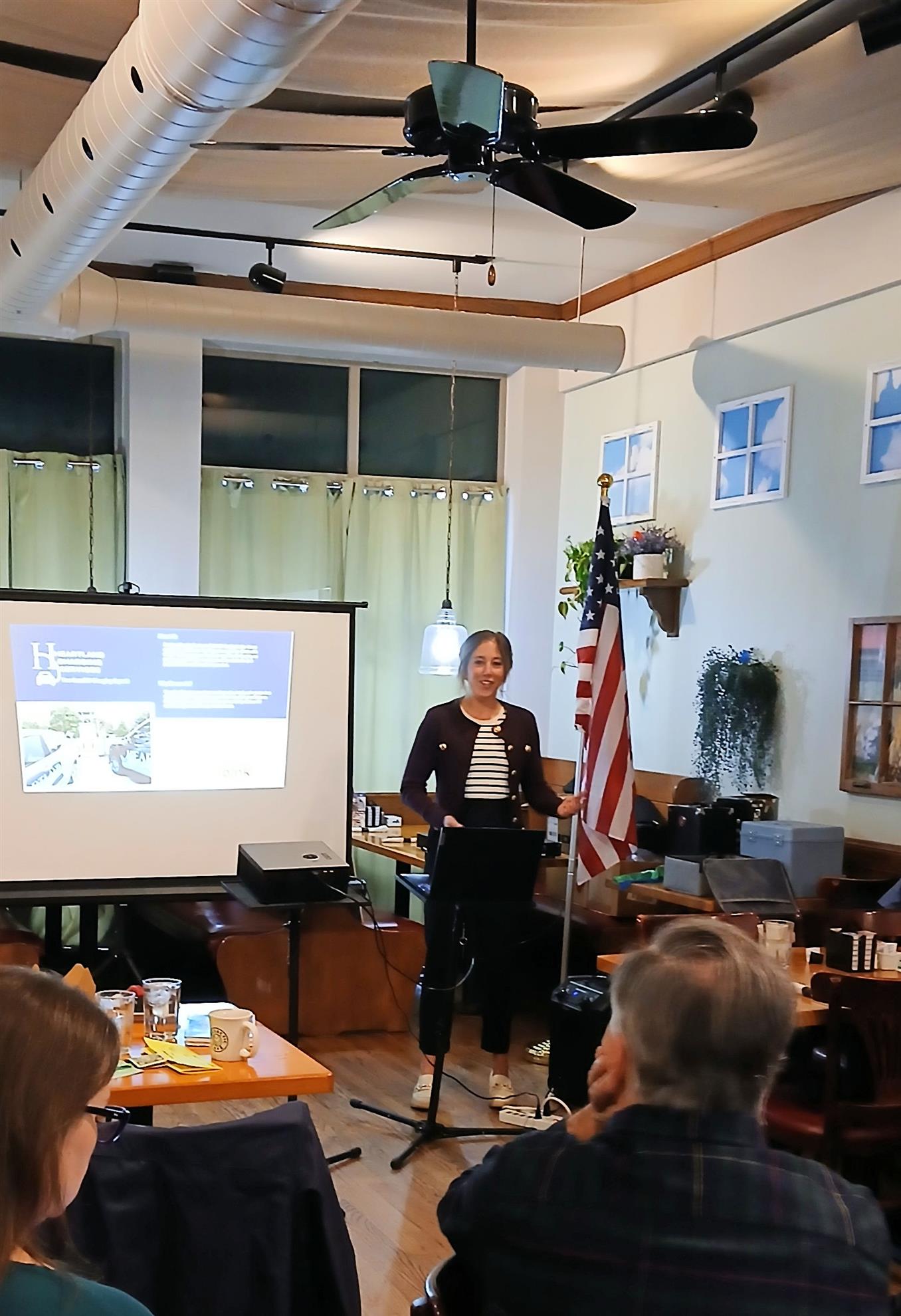
HCS focus is on the industrial electric vehicle ("EV") charging market including fleets, car dealers, multi-family residences, retail, mixed-use, higher education, health care, municipalities, and parking facilities. Services provided include:
- EV Charging Stations: HCS provides EV infrastructure solutions for commercial properties and fleets: planning, design, products, and installation
- EV Charging Software: The HCS network is wirelessly, this being vital for commercial applications as it allows both station owners and drivers to track driving and charging sessions.
- EV Charger Maintenance: As EV charging stations are exposed to the elements and other sources of wear and tear HCS provides (1) twice yearly inspection and preventive maintenance to reduce downtime and catch emerging issues before they become problems, and (2) outage response service.
In Illinois:
- EV ownership is concentrated in Cook, DuPage, and Lake counties. While exceeded by hybrid vehicle ownership, the growth of EV ownership creates a significant need for public charging (https://www.autosinnovate.org/posts/press-release/2024-q2-get-connected-press-release#:~:text=EVs%20represent%209.96%20percent%20of,market%20share%20contracted%203.83%20percent.).
- EV Charger building standards for residential developments:
- New construction of single-family and small multifamily housing (MFH) must include a minimum of one EV-capable parking spot for each residential unit that has a designated parking space. New single-family homes or small MFH that qualify as affordable housing must have one EV-capable parking space per dwelling.
- All parking spaces at newly constructed or renovated large multifamily dwellings must be EV-capable.
- Building permits for affordable single-family developments and MFH must meet the following benchmarks to support the development of EV-capable parking spaces:
- Beginning January 1, 2026, 40% of parking spaces must be EV-capable;
- Beginning January 1, 2029, 50% of parking spaces must be EV-capable; and,
- Beginning January 1, 2034, 70% of parking spaces must be EV-capable.